
If you feel “behind” in teaching your kids about history, or you feel like you don’t know enough about it yourself; if you feel overwhelmed and unprepared, or dreading history because you hated it in school, this post is for you.
First of all, there’s no such thing as being behind. That doesn’t exist. That’s public school conditioning, and considering that American students have consistently named history as their least favorite subject AND score progressively worse in it every year….maybe we shouldn’t be using the public school model as a gauge for historical literacy.
Second, we tend to put history in the same category as say, math. With math, there’s a right and wrong answer—and usually you have to have mastered a concept before moving to the next one. We feel like if we can’t spit out correct answers to a history test, we’ve failed.
But that’s not historical literacy: that’s trivia. Trivia is useless unless we know how to apply it.
Deciphering the past by understanding context, making connections between people and events, knowing how to find primary and secondary sources, being able to determine between objective historical truth and subjective historical interpretation—these skills are 1000000x more important than knowing the date the Titanic sank or how many people were killed during the eruption of Mt. Vesuvius in Pompeii.
Third, the majority of Americans were never taught contextual, chronological history: they were taught through disconnected and disjointed bits (unit studies) through the filter of social studies (which isn’t even history—it’s social science). You also hated it because not only did you have a hard time grasping the context of the lessons, but you had no idea how any of this applied to you personally. (Hint: It does. It all applies.) So if you feel overwhelmed and unprepared, you’re in good company because so do the rest of us.
This is all you need. This is it.
Four things.
1. You need a basic understanding of chronology: Stone Age, Bronze Age, Iron Age, Classical Antiquity, Early/High/Late Middle Age, Renaissance, Age of Exploration, Reformation, Age of Reason (Enlightenment), Modern Era. (Some of those overlap but this is a very basic list.) There are a zillion games and apps to help strengthen our understanding of chronology.
2. You need to know the difference between the past (what actually happened), history (how people interpret what happened), and historiography (how people interpret history over time). This is probably the most important aspect of historical literacy. Whoever is telling the story of what happened is the lens by which you view the story. And unfortunately, there are HUGE gaps in the past where we have to use our best guess (or rely on whatever archeological evidence we can find). Sometimes “history” changes because we find new information which challenges the current interpretation, and we have to backtrack and reassess what happened. This happens all the time.
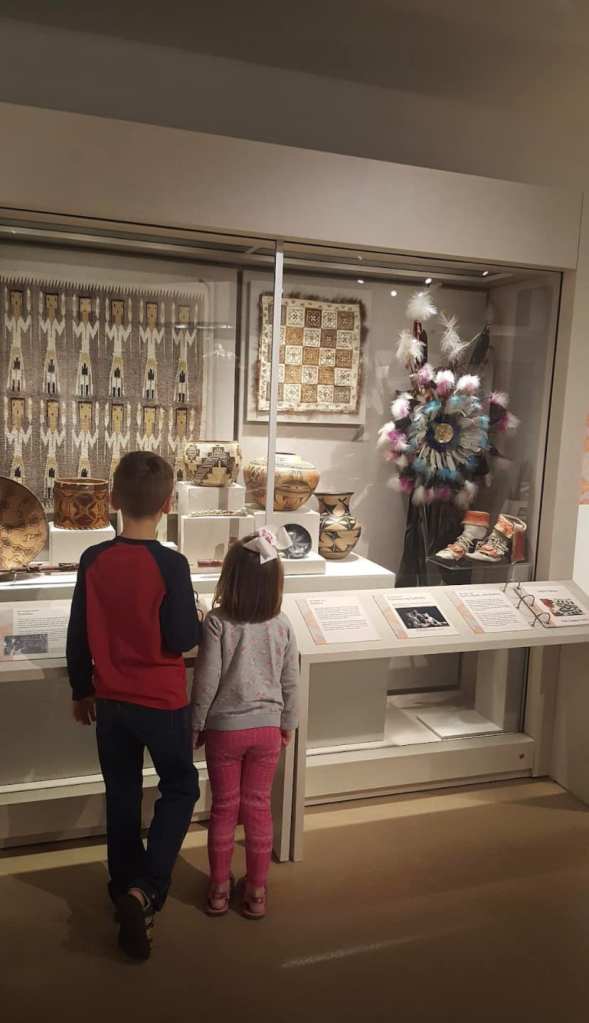
3. You need to develop historical empathy: the ability to understand and empathize with people of the past by familiarizing yourself with their world. This humanizes them and prevents the tragedy of “canceling” historical figures. Historical empathy is greatly strengthened through visiting museums, historical sites, and re-enactments. Kids need to be exposed to these early and often: don’t quiz them, don’t make them write an essay, don’t ask “what they learned”—-just let them be there.
4. You need to learn to understand bias. (This coincides with #2 in terms of interpretation.) This is one of the more difficult aspects of historical literacy because it sometimes challenges our own deeply-held beliefs. Let me give you an example that I see all the time:
(Ex:)
-A conservative Christian parent sees a lot of liberal, aggressive, anti-Christian rhetoric displayed in curriculum. It offends them (as it should).
-The Christian then runs to the extreme opposite side and purchases a curriculum which is full of pro-Christian rhetoric (usually patriotic) because it supports their beliefs and actively rejects progressive liberalism.
-The Christian feels safe because the material reaffirms her personal political beliefs, even if the material is poorly researched and would be classified more as propaganda than actual history education. (Often, it is written by a non-historian.)
-Both curriculums are wrong because they project their own bias ONTO the past rather than letting the past speak for itself. Either extreme is to be completely avoided. In cases of “leanings” (“That curriculum leans to the right”, etc.) it’s just important to know what in the material is opinion, and what is fact. Fact can be backed up by primary sources (read in context). A good source for understanding bias is an article by All Sides called “How to Spot 16 Kinds of Media Bias” (link in comments).
The truth is that no curriculum is truly off limits, you just have to know what the angle is, who the writer is, what they want you to believe, and whether you can pull out any good information (and when it’s time to toss the whole thing out). Knowing how to do this is absolutely essential because your child will walk out into the world (which is full of bias and subjective interpretation) and need this skill to be able to decipher truth.
——-
So.
Use my curriculum guide (coming in April) or keep using whatever it is you use, but please take these four points to heart:
1. Chronology
2. The past VS history VS historiography
3. Historical empathy
4. Understanding bias
You’re doing just fine and so are your kids.

 The Homeschool Historian