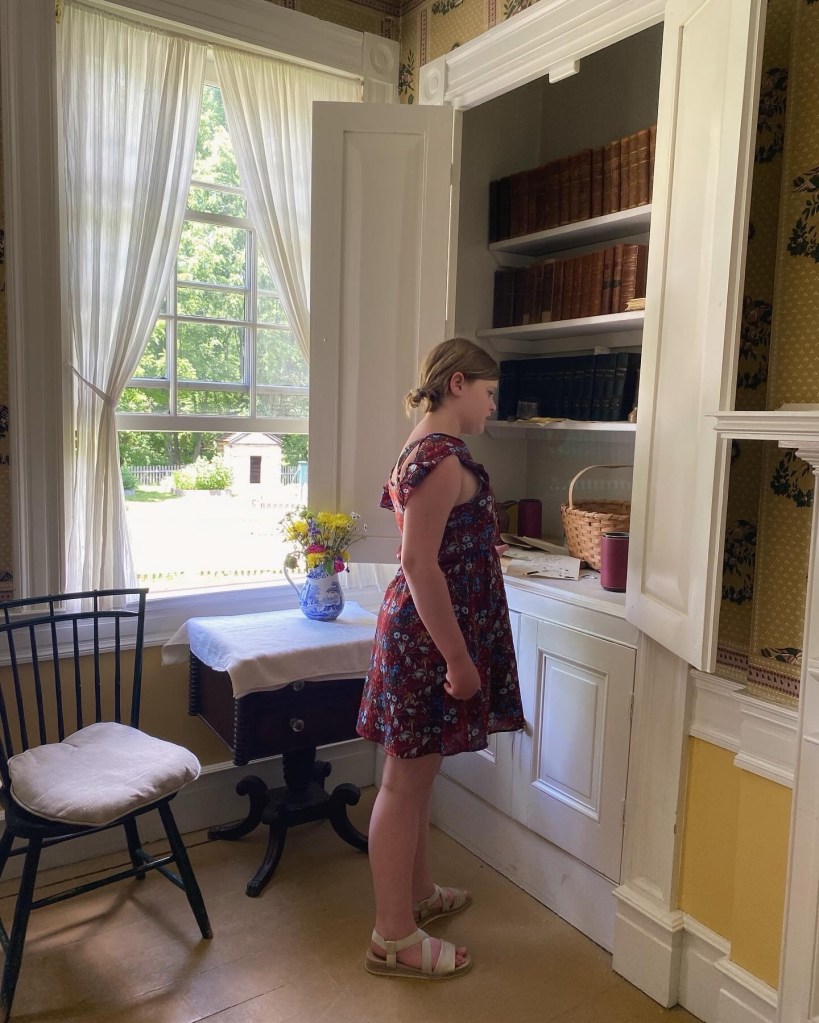
Nostalgia is alluring.
It’s comfortable.
It’s the hug you need when the present world is feeling extra dark.
Nostalgia is what’s left when the negative memories have lost their sting, when they have faded and slipped into shadow.
I’m a big, big fan of personal nostalgia as a form of escapism. (Just check my Pinterest boards.)
But what is harmless for our personal histories is damaging for academic ones.
When we rest in the comfort of what we think happened in the past because it aligns with our personal narrative, we have crossed from scholarship to propaganda. And propaganda can—and does—cross political, religious, social, geographical, and generational lines.
But propaganda is what happens when nostalgia is armed….and goes to war.
Thankfully, the best way to fight historical fiction is with historical fact:
- Pursue the past fairly: read different perspectives, think critically about what’s being said, and have a working knowledge of both media biases AND historiography.
- Know who your authors are, where their education comes from, what their critics have written about them. History tells the story, so you better know something about who is telling it.
- Know the difference between historical fact and historical interpretation, and the difference between “the past” and history. (The past is what happened, and history is how we write about what happened.)
- Know where to find primary sources, and read them. Pursue the truth, even if it makes you uncomfortable.
Especially then.
Keep nostalgia in your heart, where it comforts, and historical literacy in your mind, where it challenges.
historicalliteracy
————————-
Resources for further study:
-Finding Primary Sources for Teachers and Students (National Archives): https://www.archives.gov/education/research/primary-sources
-Find Primary Sources (University of Houston): https://uhcl.libguides.com/HIST/primary
-Historical Analysis and Interpretation (UCLA): https://phi.history.ucla.edu/nchs/historical-thinking-standards/3-historical-analysis-interpretation/
-Historical Interpretation: Deconstructing Represented Pasts (Arthur Chapman): https://discovery.ucl.ac.uk/id/eprint/10170818/3/Chapman_Historical%20Interpretation_chapter_AAM.pdf
-Historiography (NMU): https://nmu.edu/writingcenter/historiography
-How to identify bias in sources (History Skills): https://www.historyskills.com/source-criticism/analysis/bias/
-Evaluating Sources (Franklin University): https://guides.franklin.edu/sources/bias
-Evaluating Sources (Bridgewater College): https://libguides.bridgewater.edu/c.php?g=944802&p=6811022
-What If Nostalgia Isn’t What it Used to Be? (New Yorker): https://www.newyorker.com/magazine/2023/11/27/yesterday-a-new-history-of-nostalgia-tobias-becker-book-review
(The following is a chapter from Development of Philosophy of History Since 1900, available online from Open Science):
chrome://external-file/978-1-941926-11-6_Chapter06.pdf
(The following can be found through your local library):
-Dodman, Thomas. “Nostalgia as a Historical Problem.” In What Nostalgia Was: War, Empire, and the Time of a Deadly EmotionUniversity of Chicago Press, 2018. Chicago Scholarship Online, 2018. https://doi.org/10.7208/chicago/9780226493138.003.0001.
-Becker, Tobias. “History and Nostalgia: Historicizing a Multifaceted Emotion.” Chapter. In Intimations of Nostalgia: Multidisciplinary Explorations of an Enduring Emotion, edited by Michael Hviid Jacobsen, 52–69. Bristol University Press, 2021.
(This article is so well done, but it’s only available through your academic institution OR you can pay to read it: https://onlinelibrary.wiley.com/doi/pdf/10.1111/0018-2656.00112)

 The Homeschool Historian