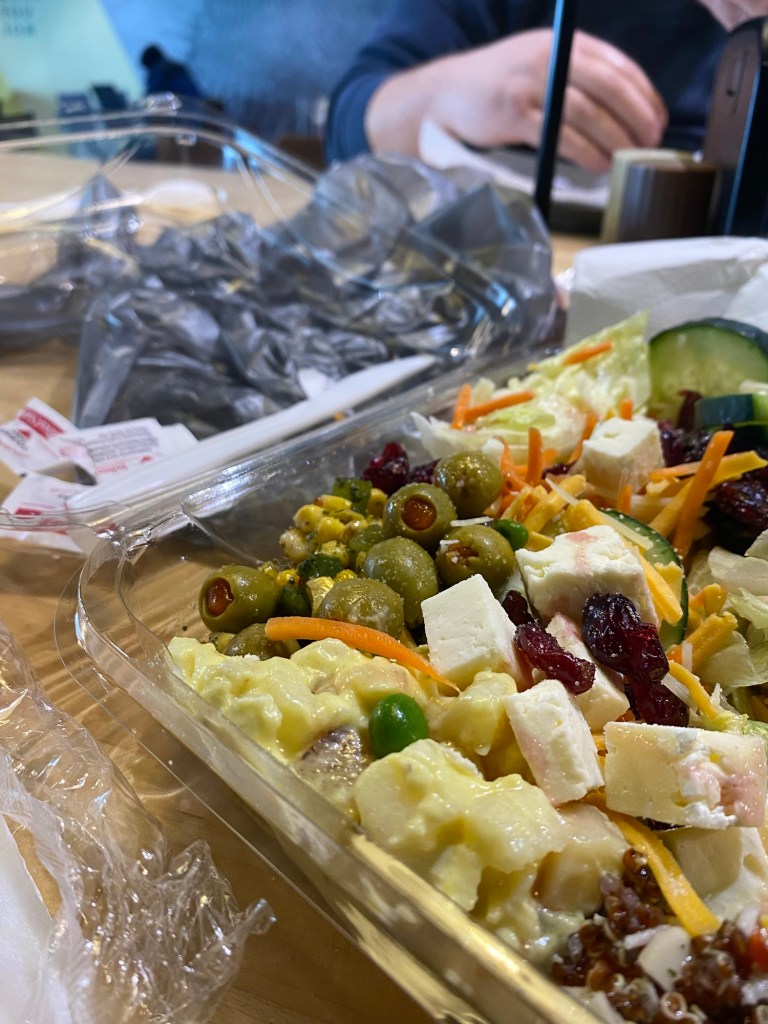
The last time I ate a hamburger, I was nine.
Thirty years later, I’m almost always the only vegetarian in the room.
Before plant-based options were readily available (and vegetarianism became more mainstream), cookouts were interesting. Eventually, you grow accustomed to having fewer options. You get used to the comments, or the people who take a bite of steak in front of you in an obnoxious way. Adjusting recipes becomes a way of life.
Being a vegetarian in a meat eater’s world (especially in the heart of the Midwest, where hunting is a regional pastime) means that I’m constantly surrounded by people who think differently, whose menus and celebrations lean heavily upon food I don’t eat, and who have very serious concerns about where I source my protein.
And, you know what? It’s totally fine.
I don’t need the world around me to change.
It’s not my business what people eat.
No one needs to cater to my preferences.
And I don’t avoid the people, magazines, cookbooks, and friends who post, share, and print recipes who don’t share those preferences.
History writing, I thought recently, should operate the same way.
There are many historians I respect but with whom I also disagree: we differ in theology, political views, and just about everything else, but their writing is well researched, thought provoking, and adds to my own knowledge. I don’t need them to have my personal preferences in order to sort through their material, because I’m able to decipher the difference between historical fact and historical opinion.
True scholarship doesn’t exist in a vacuum.
Historical literacy doesn’t grow in an echo chamber.
Maturity is being able to read the works of historians, glean what wisdom and good writing that’s there, and leave the rest.
It’s not demanding that everyone around you agrees with every nuanced opinion and preference you have.
And in the realm of history education, these are skills we’ve never been taught.
My challenge to you is to learn about the past from different sources. Read the primary sources. Know the differences between the past, history, and historiography (because they’re radically different). Don’t require to be spoon fed from a pot of your own preferences. Stop politicizing—therefore polluting—the historical method.
And maybe, just once, make a vegetarian dish at a cookout.
If not, that’s ok: I bring my own.

 The Homeschool Historian