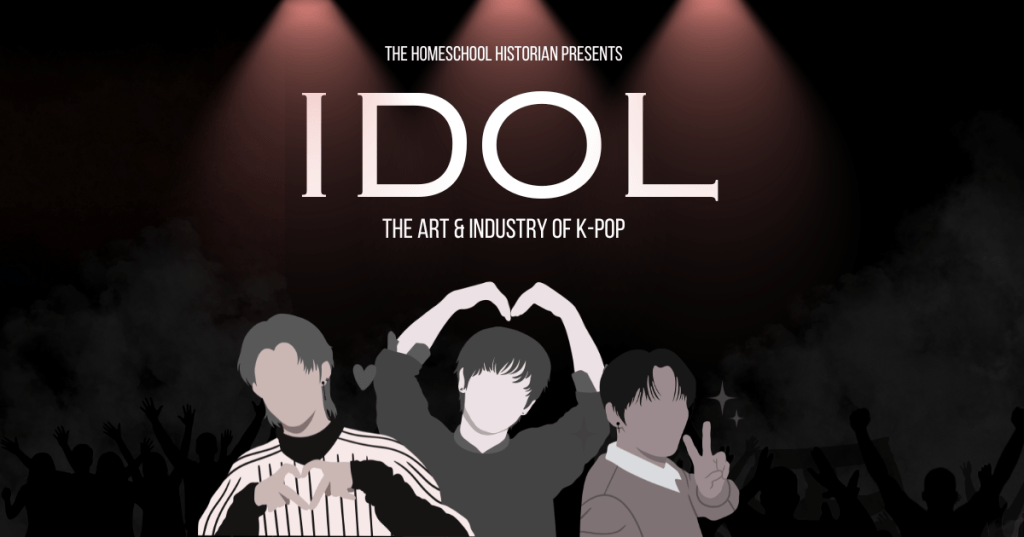
Idol $10.00 USD

REFUND POLICY – Due to the nature of my products being digital (PDF files) there are NO REFUNDS.
More about this curriculum:
This flexible, 10-lesson curriculum offers students in grades 6–12 a comprehensive, analytical examination of the history, culture, and global impact of Korean popular music. Designed for modular pacing to accommodate various academic schedules, the course utilizes K-pop as a pedagogical framework to investigate the complex historical, geopolitical, and social forces that shaped modern Korea. Students trace the nation’s cultural trajectory from ancient traditions through major 20th-century milestones, analyzing how the Korean War, national division, and rapid industrialization formed the foundation for contemporary media. The academic scope includes critical analyses of modern domestic realities, including North-South relations, state-sponsored cultural diplomacy, censorship, gender dynamics, and the systemic societal pressures within Korean youth culture.
The historical musicology component traces the evolution of Korean popular music from early trot styles and American military influences to the pivotal 1992 debut of Seo Taiji and Boys, which transformed the domestic music market. Students then chronologically analyze the distinct generations of K-pop idols from the late 1990s to the present, evaluating shifts in production methodologies, global talent incubation systems, evolving fandom structures, and international digital distribution. To support diverse learning objectives, the curriculum integrates primary and secondary resources through curated text articles, documentary videos, and structured enrichment modules. Student performance is evaluated through a multi-tiered assessment model comprising lesson-specific analytical challenges, continuous curriculum-long portfolio assignments, and a rigorous final capstone project requiring the synthesis of history, musicology, and cultural commentary.
Reviews:

