Homeschool History, tip #1 (a series):
Don’t underestimate the educational power of antique stores.
Today (just from one walk through) we discussed:
-Social norms of women before the 1920s (prompted by shoes, believe it or not)
-Methods of food preservation before electricity
-Philosophical and spiritual truths surrounding time and eternity
-Comparisons between life in the late 1800s Vs now (eating, hobbies, clothing, lifestyles, etc.)
-Methods of food production before improved farming technology
-The impact of industrialization on society, food production, and urbanization
-Education and trades before industrialization
-Amish belief and history, including the Reformation and how their pacifist beliefs affected their roles during wartime (we live near Amish country and encountered many Amish today)
-The differences in furniture (I.e. why most men don’t have wardrobes anymore, why pie safes were used, etc)
-How technology affected the home, which affected social behaviors (ex: how bringing home washing machines and dryers changed the way women interacted with each other—people began living more isolated lives and depended less on the community at large, for both companionship and help)
Ways to incorporate antique stores into your homeschool:
- The “What is it?” challenge:
Have each child take a picture of something that no one knows anything about. At home, have them research the item (what it is, what it’s used for, when and where it was typically produced, when it typically stopped being used). Present your findings. The most interesting presentation wins. (Note: You could even do a mock “Antique Road Show”!) - “Hello, Old Friends” research project:
Buy several old photographs (usually the ones without frames are under $2/each). Study the picture and determine the time period and approximate location. Look on the back for clues (names, dates, addresses). Contact the historical society in the area you purchased it, and ask: have you seen the background buildings before in other photographs? Are the buildings still standing? (Note: Digital archives are available in many local historical societies or museums.) Use the following sites to locate the people or building in your photograph:
-FindaGrave.com
-National Historic Landmarks: https://www.nps.gov/subjects/nationalhistoriclandmarks/list-of-nhls-by-state.htm
-National Register of Historic Places: https://www.gsa.gov/real-estate/historic-preservation/historic-building-stewardship/national-register-of-historic-places
-Identifying Old Photographs: https://ancestralfindings.com/identifying-old-photographs-how-to-do-it-and-how-it-can-help-your-research/
Create a presentation using Canva, PowerPoint, or another platform about the photograph.
- Interview assignment:
Contact your local antique store and ask if you can interview the owner, volunteer, booth owner, or worker for a history assignment. Ask the following questions:
-What are the most interesting pieces in the store?
-Which items sell the fastest and why?
-How does the owner/seller know what the items are? Do they ever not know? How did they find out? (Note: Some items I saw today I didn’t even know.)
-May I have a tour of the store?
Write or type the interview up and learn how to use an interview as a primary resource: https://paperpile.com/g/interview-primary-source/
- Re-enactment at Home:
Study a unique item you found at an antique store (use this resource to help: https://www.lovetoknow.com/home/antiques-collectibles/free-antique-identification) If possible, try to duplicate its use at home.
Examples:
-use a cast-iron skillet for cooking
-use a coffee grinder instead of pre-ground coffee
-make bread using wooden bread-kneading bowls (bonus points if it’s a vintage recipe)
-use stoneware to make older recipes like sauerkraut
-use vintage farm or hand tools to do a task normally done by modern machinery
(To determine if it’s safe to use antique kitchen items, visit: https://ourgabledhome.com/using-antique-and-vintage-kitchen-items-is-it-safe-and-healthy/) - Chronological Antiquing:
Have a child choose 5-10 items in the antique store to photograph, draw, or list. Try to organize the items in chronological order: (guessing is fine!)
For example, our collection today included:
-feed sacks (1920s)
-Coca Cola signs (1950s)
-Victorian shoes (1837-1901)
-vintage radio (1960s)
-oil lamps (looked to be around 1880 to me?)
-wooden letters (new, made to look old)
This activity helps develop the concept of chronology and the passing of time.
- Then and Now:
Choose an item, then—if the item is no longer used—figure out its modern equivalent. Good examples include:
-type writers —>computers
-vintage games —>video games
-maps—>GPS
-hand-crank wooden wall phone—>cell phone
-oil-lamps—> electric lights
(Etc).
Make a Venn diagram or a short timeline about the item(s) to see how technology has changed the way we use it.
————————-
Who knew an antique store could be so useful?
Homeschool History, tip #2 (a series):
Cemeteries. Hear me out.
Cemeteries are amazingly interesting and you can learn a LOT from visiting them.
- Stones for genealogy and community history:
Epitaphs on headstones give us a lot of information about individuals, families, and the area in which the cemetery is established. They’re so important that hobbyists comb cemeteries around the country and document the stones they find through FindaGrave.com (I use this site constantly for genealogy purposes). - Headstone “emblems of belief”:
We tend to know the cross and the Star of David, but there are a LOT of other emblems of belief. Finding and researching these can help us learn about different sects, denominations, and religious beliefs. Learn about them here, and see how many you can find in your local cemetery: https://www.cem.va.gov/cem/hmm/emblems.asp - Cemeteries humanize the past like nothing else.
I write about historical empathy on this page often, and what is more empathetic than visiting a grave site? One of my favorite activities in a cemetery is to look at the dates on the stones and try to imagine what kind of experiences the person had in their lifetime. For example:
-Born in the 1830s, died in the 1890s: the person saw the period of mass Irish immigration, Westward Expansion, Manifest Destiny, railroad expansion, Bleeding Kansas, the American Civil War, Reconstruction, Jim Crow, industrialization (second Industrial Revolution), urbanization, and the formation of several new states.
-Born in 1790, died in the 1840s: the person saw the period of the Louisiana Purchase, Lewis and Clark expedition, was alive at the time of many of the Founding Fathers, witnessed the second Great Awakening, the formation of the two-party political party system, the War of 1812, Indian-American wars, abolition, and Westward Expansion.
Being able to place people on the human timeline helps develop that crucial element of chronology that we lack in the US right now. - Cemeteries as reminders of the cost of war:
Especially with Memorial Day around the corner, cemeteries help us understand the heavy cost of war. Our culture has, in many ways, turned war into entertainment: movies, TV, and video games have contributed to various fallacies about the nature of war (although there are many awesome movies out there). Walking through cemeteries and spotting military symbols on headstones serves as a sober reminder than men and women really did fight and die for their country—and they are worth remembering. For more about military symbols, visit: https://militaryconnection.com/blog/decoding-military-headstones-and-other-cemetery-memorials-for-american-soldiers/ - Cemeteries as symbols of legacy.
As a Christian, cemeteries represent (for me) both the certainty of death and the hope of eternal life with Christ (Romans 5). Although we might not all agree on that, we CAN agree that we will all end up there one day: cemeteries act as a visual reminder that all of us will leave a legacy behind. They urge us to grapple with using our time here wisely, and that’s a lesson we should definitely be teaching our kids.
The next time you see an interesting cemetery, pull over and check it out (just be respectful)!
For interesting cemeteries around the US, visit:
https://www.bobvila.com/slideshow/the-25-most-hauntingly-beautiful-cemeteries-in-america-52391
Homeschool History, tip #3 (a series)
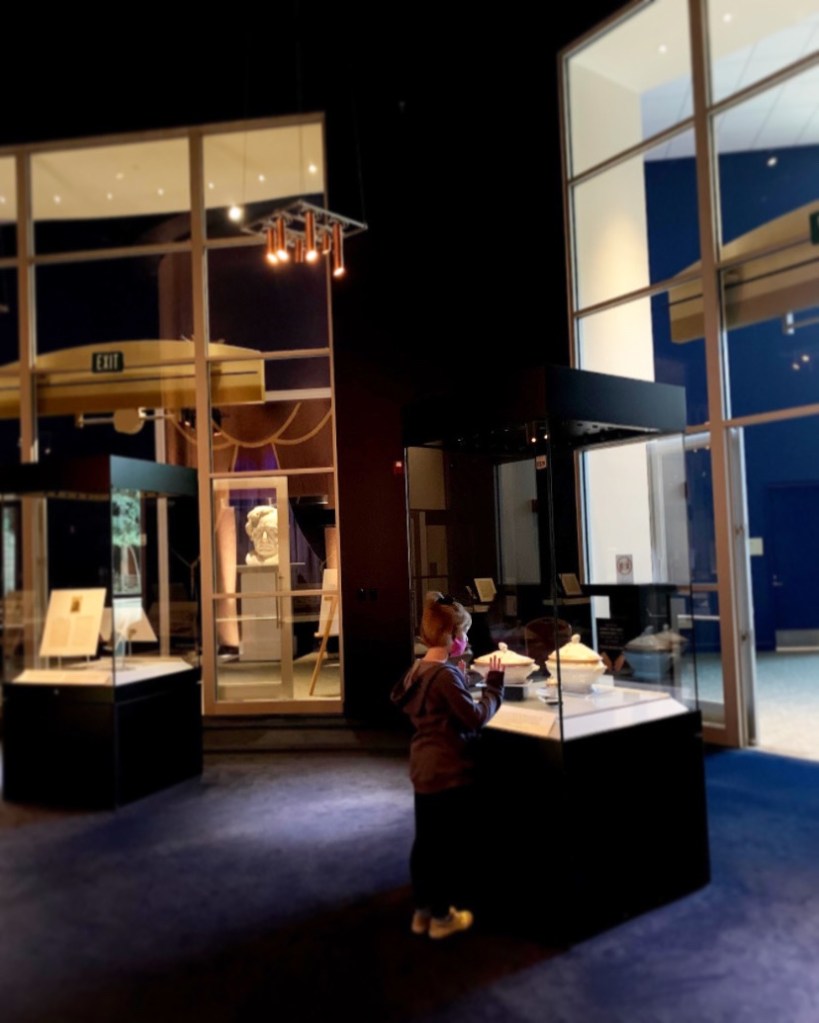
Local museums: go small to go big.
We all know the big ones.
The Smithsonian or National Archives in Washington, D.C., Field Museum of Chicago, the Louve in Paris, the British Museum in London, and at least a dozen more recognizable museums around the world:
They deserve every bit of recognition they receive.
After all, they cover The Big Things like national treasures and internationally important artifacts. Visiting them is the ULTIMATE experience: they have pristine exhibits carefully curated by degreed public historians, and the money and resources to make their institutions the best in the world.
But the big guys are just a small piece of the story.
The Charters of Freedom, for example, are the three foundational documents upon which the United States was built: the Declaration of Independence, the Constitution, and the Bill of Rights are sitting—right now—-enshrined in the upper level of the National Archives Museum. I’ve always wanted to go, and someday will, to see with my own eyes the words of the Founders which audaciously defied the greatest power in the world and launched an age of revolutions around the globe.
Guess what else I’ve seen with my own eyes?
Fallen forts of the Revolution, crumbling far away from the prestige (and financial support) of Washington or the Boston historical complex.
Graves of American Revolutionary soldiers, regular farmers or laborers who fought a revolution with real guns rather than words.
Brown signs denoting historical areas along well-traveled roads, punctuation marks in American history but barely acknowledged by passersby.
Small history museums dotting the landscape of towns no one cares much about.
These seemingly small footnotes represent the vast amount of influencers of and participators in our collective history. Often times they’re cared for by humble but diligent volunteers from historical societies or college students earning credit in their public history course. They’re often free, donation-funded, or paid for by local tax dollars, and they never see the kind of visitor traffic that the big guys see.
The irony is that without the “small” history museums, the big ones would have no real meaning: most of human history is shaped by every day people who act as recipients and players in national events. The Constitution is only as powerful as the people declare it to be, the Declaration of Independence only had power because it was supported by the non-Founders. It’s one thing to spout platitudes about freedom, and it’s quite another to put your life on the line for it.
Take your families to the local museum.
Please.
Walk through the exhibits, even if they’re not as flashy as the big ones.
Show up at the re-enactments.
Support them with your wallet or your time.
Learn about your town, your community, and its role in the big, big story of whatever country you live in.
Historic preservation should be a community effort because we all benefit from remembering, archiving, and honoring the past.
Go to the museum.

 The Homeschool Historian
What a novel idea to use antique stores as a learning place for homeschoolers. I have to be honest. This is the first time I’ve thought about doing this. Museums, yes, but antique stores are filled with much to discuss. I loved the projects they could do too. Thanks for the great ideas.
LikeLike